Understand Any Business in One Page: The Business Model Canvas
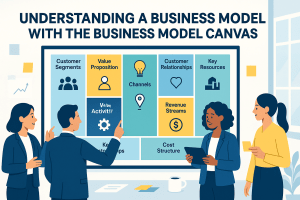
Ever look at a new idea and think, “Where do I even start?” The Business Model Canvas (BMC) is your one-page shortcut. It turns all the moving parts of a business into a simple, visual map so you can see how value is created, delivered, and captured—without drowning in a 40-page plan.
Below, I’ll walk you through the nine building blocks of the BMC. Then we’ll zoom in on the single biggest reason products flop (spoiler: weak value) and fix it with the Value Proposition Canvas (VPC).
The Business Model Canvas at a Glance
Think of the BMC as a dashboard with nine tiles. Fill them in with quick, concrete notes—no essays allowed.
1) Customer Segments
Who will buy your value? Be specific. “Busy parents with kids under 10 who order groceries online” is better than “everyone.”
2) Value Proposition
Why do customers choose you? What problem do you solve or what desire do you fulfill—better than alternatives?
3) Channels
Where and how do customers discover, evaluate, buy, and receive your product? (Website, marketplace, retail, partners, sales team.)
4) Customer Relationships
How do you acquire, onboard, retain, and grow customers? (Self-serve, community, dedicated support, account managers.)
5) Revenue Streams
How do you make money? (One-time sales, subscriptions, usage fees, licensing, ads.) What’s the pricing logic?
6) Key Resources
What assets do you need to deliver value? (People, brand, IP, tech, data, capital, physical assets.)
7) Key Activities
What must you be excellent at? (R&D, manufacturing, content creation, logistics, sales, partnerships.)
8) Key Partnerships
Who helps you operate or grow? (Suppliers, distributors, platforms, co-marketing allies, agencies.)
9) Cost Structure
What are your major costs? (COGS, payroll, marketing, software, logistics.) Which costs scale with growth vs. stay fixed?
Pro tip: Fill the Canvas in this order for clarity: Customer Segments → Value Proposition → Jobs-to-be-Done notes → Channels → Customer Relationships → Revenue → Key Activities → Key Resources → Partnerships → Cost Structure. Then iterate.
Reality Check: Why So Many Products Fail
A commonly cited pattern behind product failures: teams don’t define the value clearly enough from the customer’s perspective. They ship features, not outcomes.
Enter the Value Proposition Canvas (VPC)—a zoomed-in tool that aligns what you’re building with what customers actually need.
The Value Proposition Canvas (Strategizer Map)
The VPC has two halves: Customer Profile and Value Map. Your goal is “fit”—a tight match between the two.
Step 1: Understand the Customer (Customer Profile)
Jobs — What tasks are customers trying to complete? Functional jobs (“get from A to B”), social jobs (look competent), emotional jobs (feel confident).
Pains — What’s frustrating, risky, slow, or expensive about how they do it now?
Gains — What outcomes would delight them? (Faster, cheaper, safer, more status, more control.)
Step 2: Define the Value (Value Map)
Products & Services — What exactly are you offering?
Pain Relievers — How do you remove or reduce those pains?
Gain Creators — How do you deliver the desired gains?
Step 3: Achieve Fit (Product–Market Fit)
When your Pain Relievers map neatly to real Pains and your Gain Creators trigger meaningful Gains, you’re close to product–market fit. That’s when growth compounds—because you’re solving a problem people truly care about.
A Quick Example
Idea: A weekly meal-planning app for busy parents.
Customer Profile
Jobs: Plan meals, shop efficiently, keep kids fed with healthy options.
Pains: Time-consuming planning, wasted groceries, picky eaters, last-minute stress.
Gains: 20–30 minutes saved per day, less waste, kid-approved meals, predictable routine.
Value Map
Products & Services: Mobile app with auto-generated meal plans + smart grocery lists synced to local delivery.
Pain Relievers: One-tap plans, pantry-based suggestions to reduce waste, backup “10-minute dinners.”
Gain Creators: Kid-friendly filters, budget mode, “repeat family favorites,” calendar sync for busy nights.
Fit Test: If parents finish the setup in under 5 minutes, get a plan that matches budget + preferences, and successfully cook 4+ dinners the first week, you’re onto something.
How to Use Both Canvases in Practice
Start wide with the Business Model Canvas.
Sketch your nine blocks. Keep it scrappy. You’re building a hypothesis, not a memoir.
Zoom in with the Value Proposition Canvas.
Interview 5–10 target customers. Capture Jobs, Pains, Gains in their words. Then design Pain Relievers and Gain Creators to match—ruthlessly cut anything that doesn’t map.
Prototype and test.
Put the smallest version of your value in front of customers (mockups, concierge service, pilot). Measure behavior, not just opinions.
Tighten the loop.
Revise the VPC based on what you learn. Then update the BMC to reflect the changes in channels, pricing, partnerships, and costs.
Align the business around value.
Your messaging, pricing, onboarding, and success metrics should all tell the same story: the customer’s job is easier, faster, or better with you.